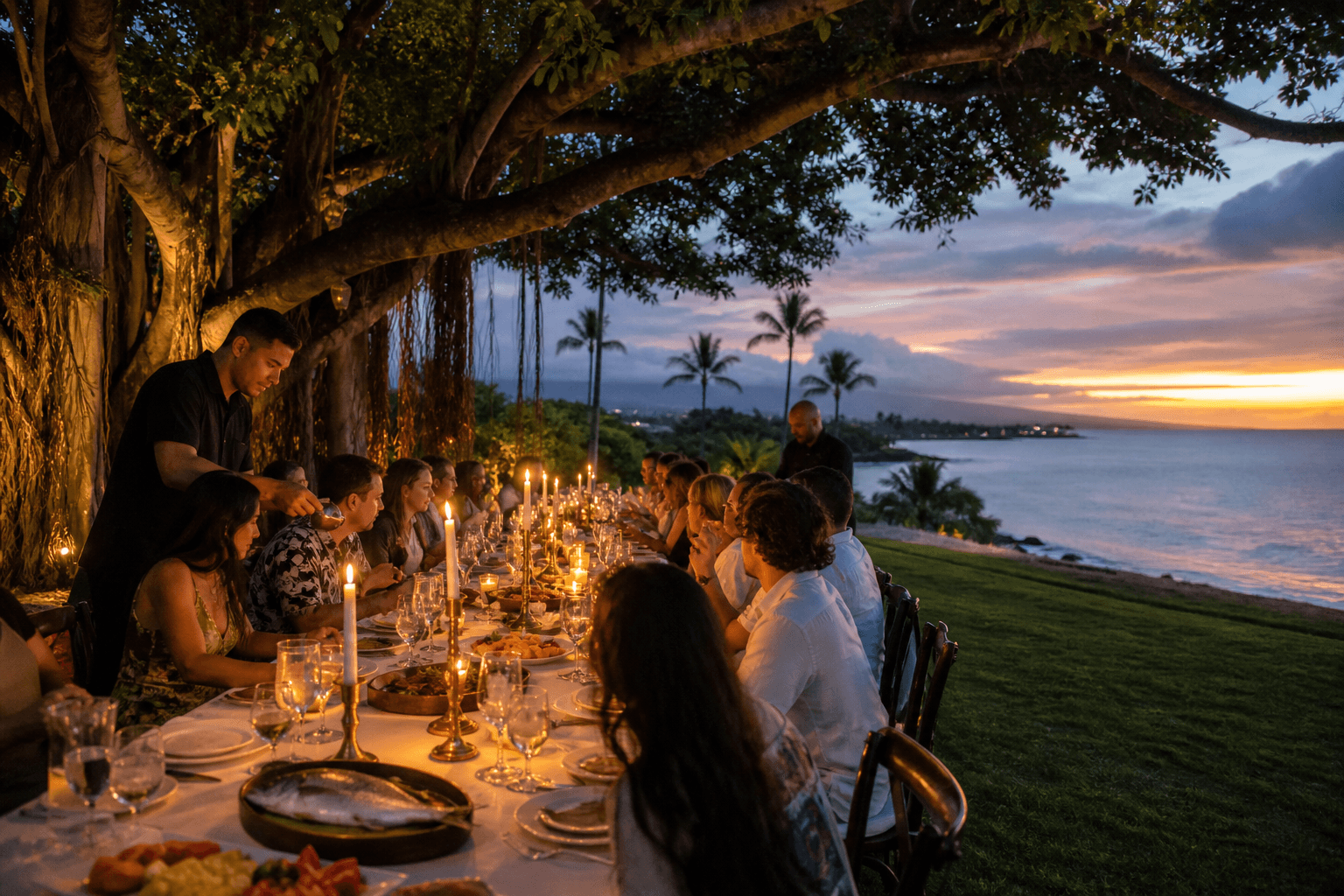
Start with the guest list and the island side
Write down the guest count you expect, the count you could live with, and which side of the island you want to wake up on. South Maui (Wailea, Makena, Kīhei) and West Maui (Kāʻanapali, Nāpili, Kapalua) hold most visitor stays, the resorts and the larger villas. Upcountry, on the slopes of Haleakalā, is where the ranches and gardens are. The east side toward Pāʻia, Haʻikū and Hāna is lush and beautiful, and much further from everything.
Guest count also decides the format. A family table of twelve can be cooked in a villa kitchen. A reception of sixty needs servers, a sous-chef, power, a covered area and somewhere to plate, which not every house has.
Resort lawns and ballrooms
Wailea, Kāʻanapali and Kapalua resorts offer ocean lawns, terraces, chapels and ballrooms with in-house coordinators. Everything sits in one contract, guests walk to their rooms and there is an indoor rain plan. The trade-off is that resorts generally require their own banquet kitchen, so outside caterers and private chefs are usually not allowed, and food and beverage minimums apply.
If you love a resort for the ceremony, ask whether the welcome dinner, rehearsal or day-after brunch can happen at a villa nearby. That is where a chef usually comes in. Our Wailea restaurants guide and Kāʻanapali restaurants guide cover eating out around both resort areas.
Beach ceremonies and county parks
Beaches in Hawaiʻi are public. Commercial wedding activity on state shoreline is regulated by the Department of Land and Natural Resources, so planners and officiants who work on Maui beaches normally hold the permit and know the limits on group size, set-up and sound. You cannot reserve the sand or close it to the public, and structures such as arches and chairs are restricted.
Maui County beach parks need a county permit for organized gatherings, and alcohol rules in parks are strict. Check the current rules with the county before you promise anyone a champagne toast on the beach. The usual Maui pattern is a short ceremony on the sand, then a reception at a villa, resort or private venue.
Upcountry ranches, gardens and estates
Upcountry Maui, around Kula and Makawao, holds ranches, gardens and estate venues with views down to the ocean and across the isthmus. The air is cooler than the coast, evenings can need a layer, and the light at sunset is spectacular. These venues are built for weddings with parking, restrooms and power, and each sets its own rules on caterers, alcohol, end times and noise. Ask for them in writing before you sign.
Upcountry is a drive from the resort coast, so plan shuttles and a realistic end time. Upcountry chef days on our side carry a published surcharge from $75 for elevation and drive time. Haleakalā itself is covered in our Maui elopement guide, because the national park sets its own permit rules.
Private villas and vacation rentals
A private villa is the most personal Maui wedding venue, and the one with the most homework. Many owners and homeowner associations forbid events, and those who allow them set guest limits, hours and parking rules. Get written permission for the event, the guest count and the hours before you pay a deposit.
Rental rules on Maui are also changing. Maui County has passed Ordinance 5909, which phases out vacation rentals in apartment-zoned buildings: in West Maui that use must stop on 1 January 2029 and elsewhere in the county on 1 January 2031. Confirm the property’s permit status when you book a future wedding week.
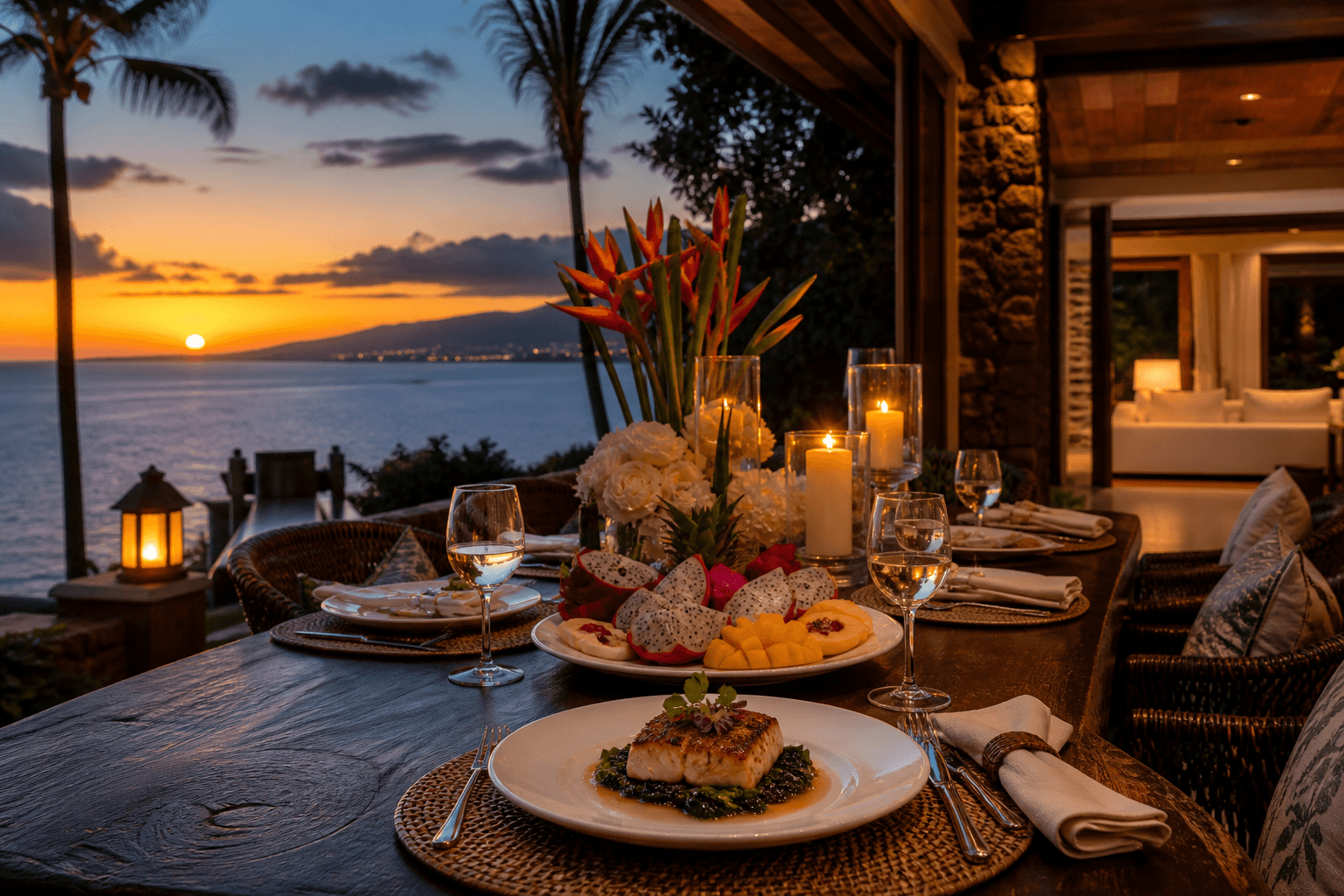
A villa with a real range, a covered lānai and a dining table that seats your list is the ideal setting for a welcome dinner, rehearsal or at-home reception. Wailea, Kapalua, Kāʻanapali, Nāpili and Makena are our base zones; Pāʻia and Haʻikū are quoted with the menu.
Weather, wind, whales and sunset
South and West Maui are generally the drier, sunnier sides, while the east side and the upper slopes catch more rain. Trade winds blow most of the year and move veils, candles and paper, and the central valley can be very windy in the afternoon. Every outdoor venue needs a named covered fallback written into the plan.
Humpback whales visit Maui’s waters in winter, which makes a December to March ceremony on the coast memorable and also means villa inventory is tight then. September, October and May are the busiest wedding months on our calendar, so those dates go first.
Where a chef or a staffed wedding week fits
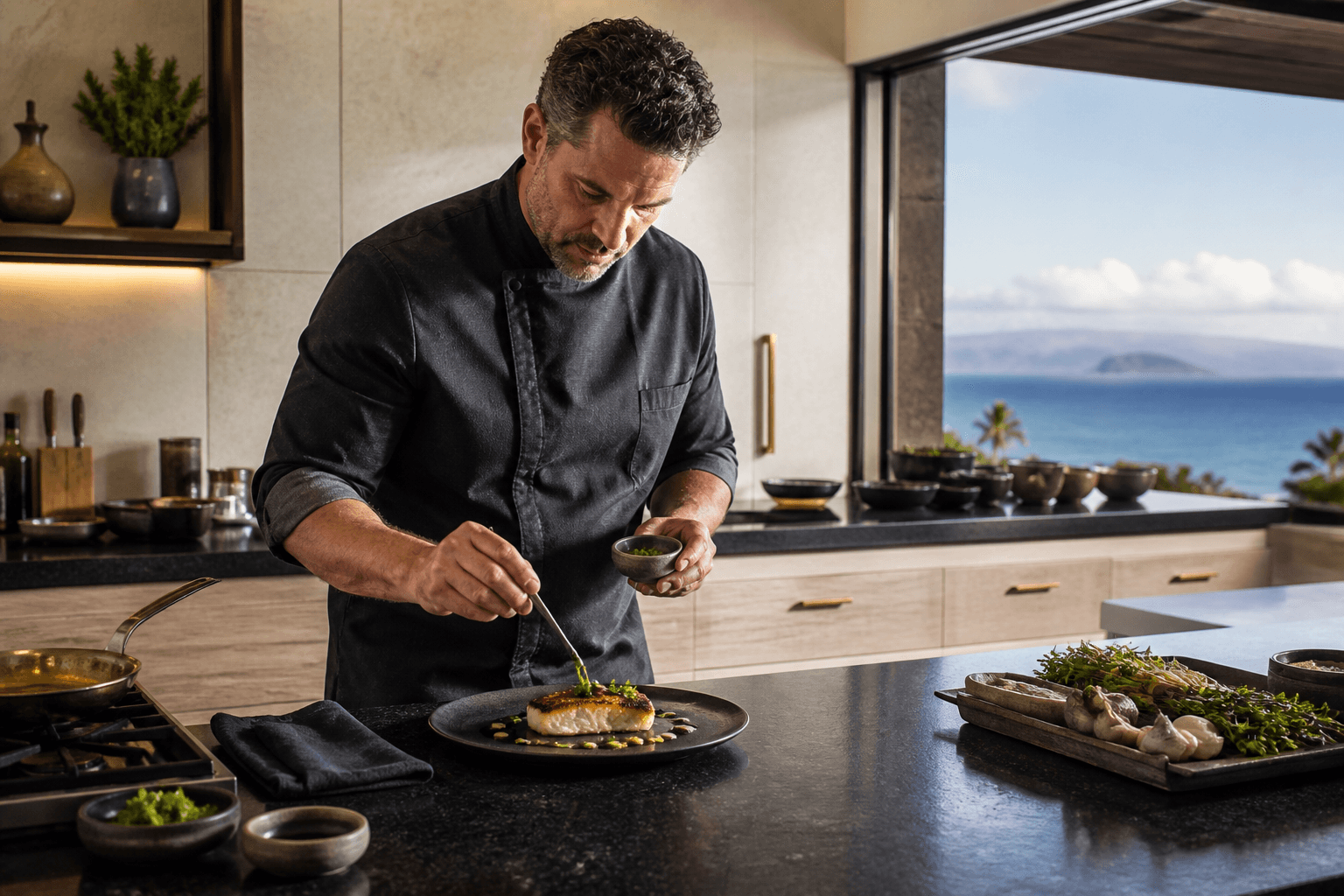
If the venue allows outside food, choose between a chef-led dinner and a staffed event. For a family table, a personal chef Maui dinner is planned with you, shopped that morning, cooked and served in the villa, and the kitchen is cleaned afterwards.
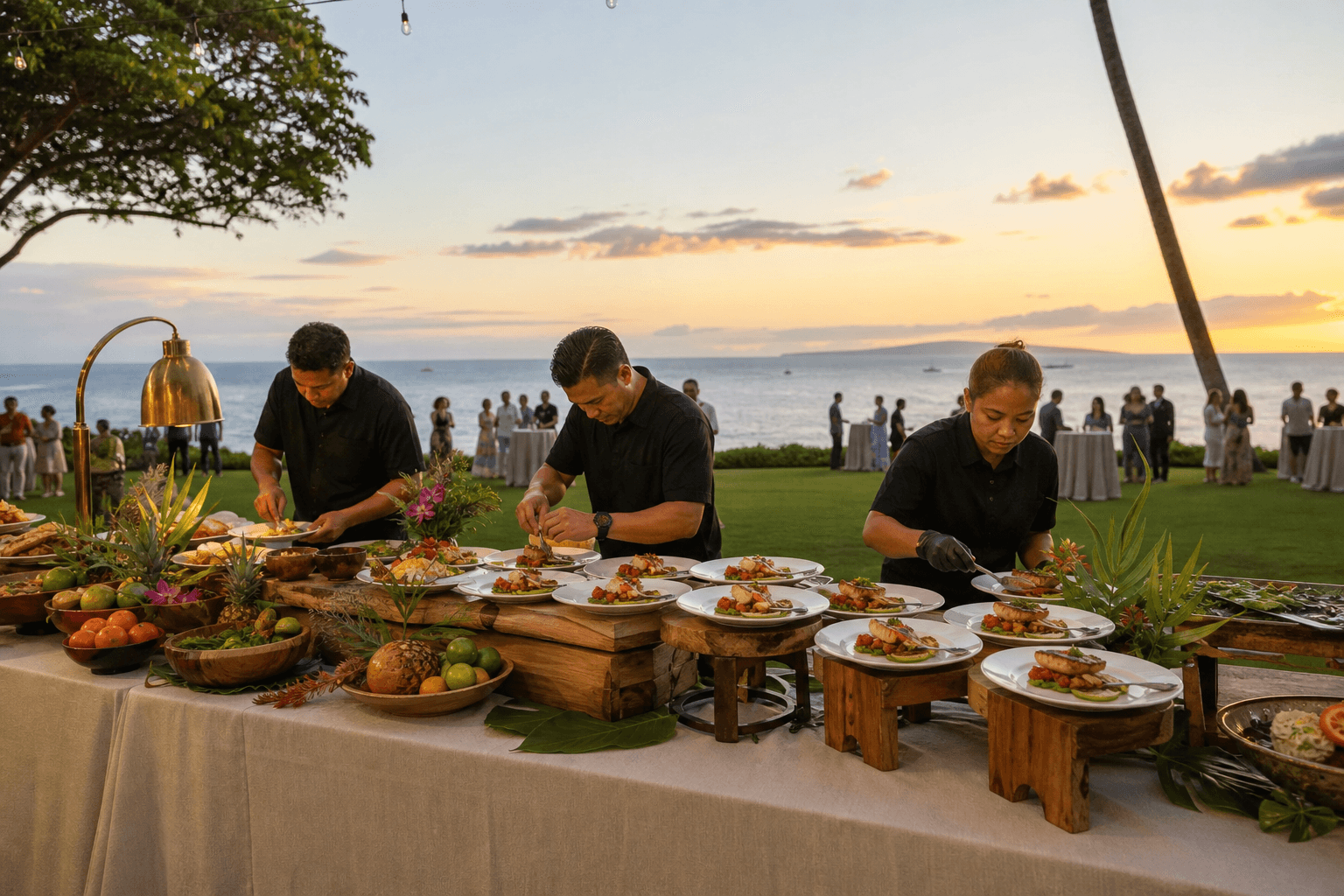
For a reception of roughly ten to seventy-five at a villa or estate, wedding catering Maui writes the week as separate lines: welcome dinner, rehearsal, reception and recovery brunch, so you can cut one without reopening the rest. Other staffed parties are Maui catering. Servers are $80 an hour and a sous-chef $105 an hour, on four- to five-hour minimums. Tables, linens, tents and rentals are not included unless you ask, and then they are quoted separately.
What the food costs with us
Maui wedding receptions start from $225 a guest plus staffing. Signature dinners are $225–$375 a guest with groceries included, and elopements and dinners for two start from $750 as a fixed event. A 20% service charge and Hawaiʻi GET up to 4.712% are their own lines, a 50% deposit locks the dates, and gratuity is voluntary. The full card is on Maui private chef cost.
How to plan it
Send the venue or villa address, your dates, the guest count, which events you want fed and any allergies through the quote form, or WhatsApp +1 808-468-7748. We reply in writing, including whether the kitchen can hold your list. For single villa dinners, see private chef Maui.