What a Maui elopement package covers
Most Maui elopement packages are built around a short ceremony window: a licensed officiant, a photographer, the location permit and sometimes a lei or flowers. That is where the planning effort belongs, because the setting is the reason you chose Maui.
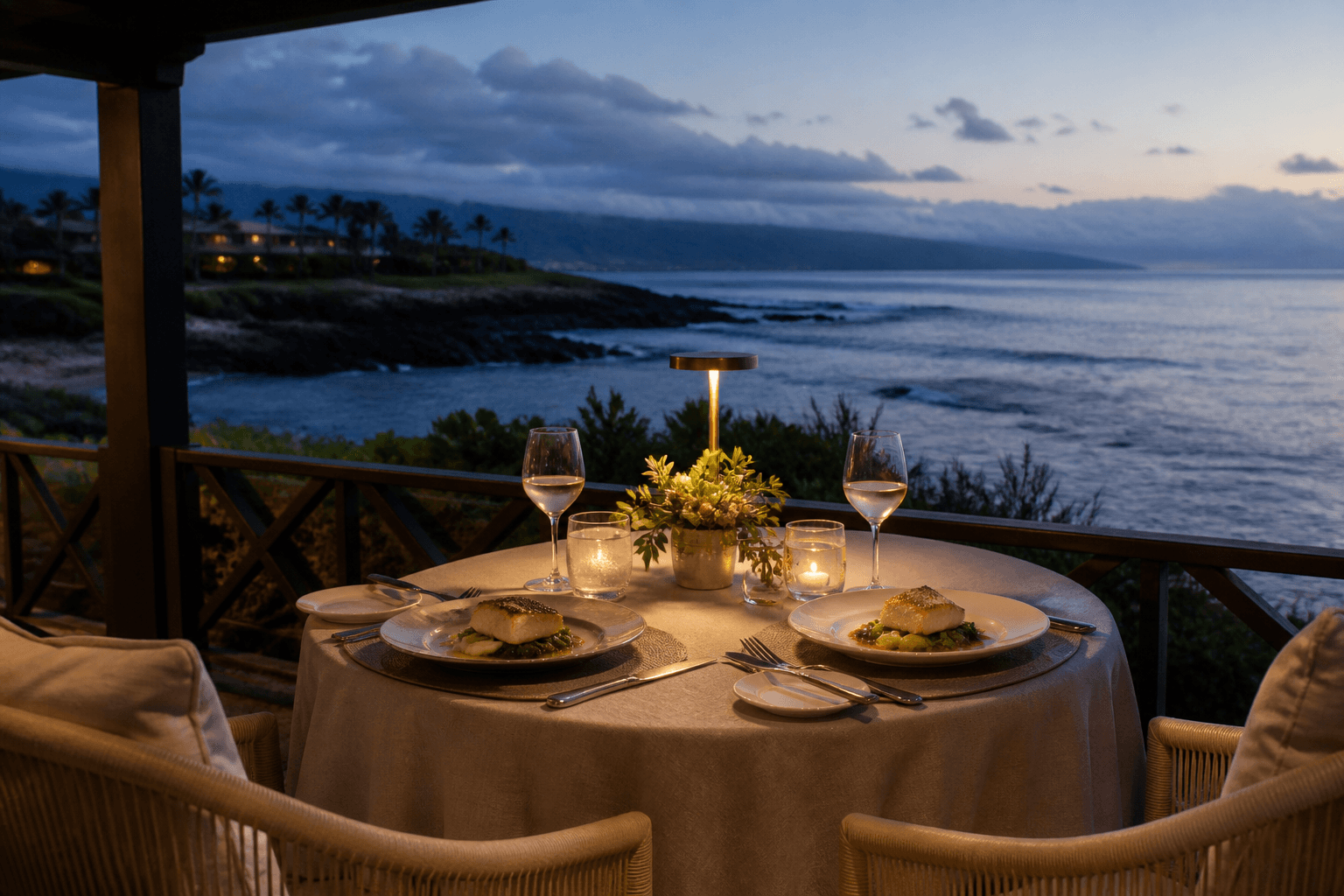
What they rarely cover is the meal. After a sunset ceremony you are hungry and often a drive away from a restaurant with a free table, and after a sunrise ceremony you have been awake since the middle of the night. A private meal at your villa, dinner or brunch, fills that gap, and it is the part of the day we cook.
The marriage license and the officiant
Marriage licenses in Hawaiʻi are issued by the state Department of Health, so the rules are the same on Maui as on every island. You apply online, then meet a licensing agent together in person with government photo ID. The license is valid for 30 days and only in Hawaiʻi, there is no waiting period, and there is no residency or blood-test requirement. The fee at the time of writing is $65; check the Department of Health site before you travel.
Your officiant must hold a current Hawaiʻi license to perform marriages. Professional Maui officiants already do. If a friend is marrying you, they need to apply to the state well ahead of the date.
Choosing the setting: South Maui, West Maui, Upcountry or Haleakalā
South Maui, around Wailea and Mākena, is the dry, sunny coast with golden beaches and the sun setting over the water, with Kahoʻolawe and Molokini offshore. West Maui, around Kāʻanapali and Kapalua, faces Lānaʻi and Molokaʻi and has more trade wind. Upcountry, in Kula and Makawao, trades beaches for gardens, ranch land and cooler air, and most ceremonies there are at private properties.
Haleakalā is the dramatic choice: a ceremony above the clouds at sunrise or sunset. The summit is in a national park and more than 10,000 feet up, so it is cold, often near freezing before dawn, and the air is thin. Ceremonies in the park need a park permit, and sunrise visits need a vehicle reservation. Check the park’s current rules early, because they decide the whole schedule.
Beach permits and what they mean for the toast
Sandy beaches in Hawaiʻi are generally state shoreline. A paid ceremony there needs a right-of-entry permit from the Department of Land and Natural Resources, usually obtained by your officiant, planner or photographer. The conditions are strict: no alcohol, no tables, arches or tents, chairs only for guests who need them, and a two-hour limit including set-up and clean-up. County beach parks can carry their own rules, so ask your vendor which permit covers your spot.
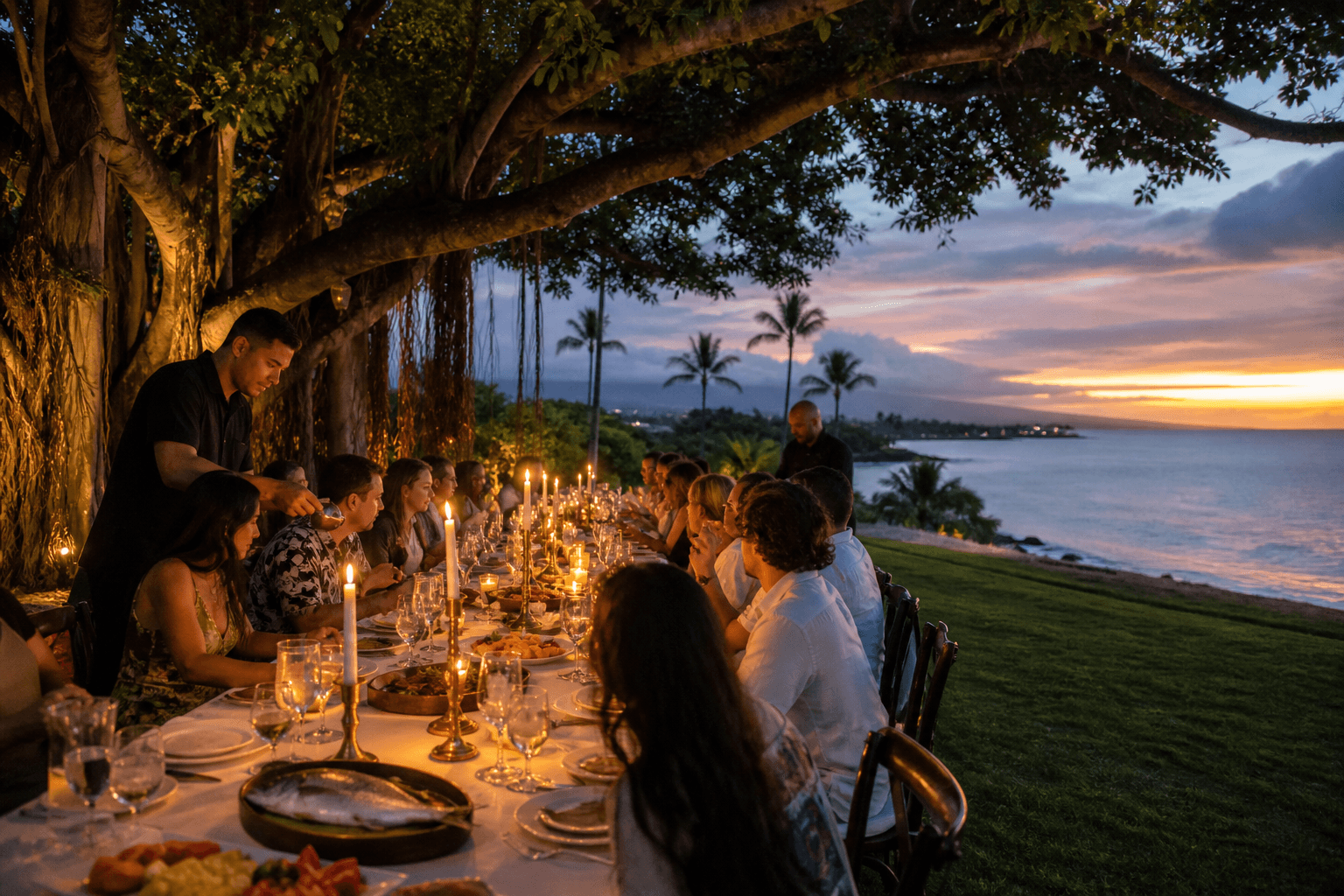
That is why many couples split the day. The beach is for the vows and photographs; the champagne, the food and the long table belong at the villa, where only your host’s permission is needed. A personal chef Maui dinner is set up while you are at the ceremony.
Sunrise or sunset: timing the day
A sunset ceremony is the easy rhythm. Hair and make-up in the early afternoon, the ceremony an hour or so before sunset, portraits until the light goes, then back to the house, where the chef has a cold drink and a first bite ready and dinner follows when you are.
A Haleakalā sunrise means leaving in the small hours, since the drive up takes around two hours from the resort coasts, and coming down tired, cold and very hungry by mid-morning. That is the moment for a long brunch at the villa instead of a dinner: eggs, fruit, fish, coffee and something sparkling, then a nap. We cook breakfast and brunch as well as dinner.
Where the dinner happens
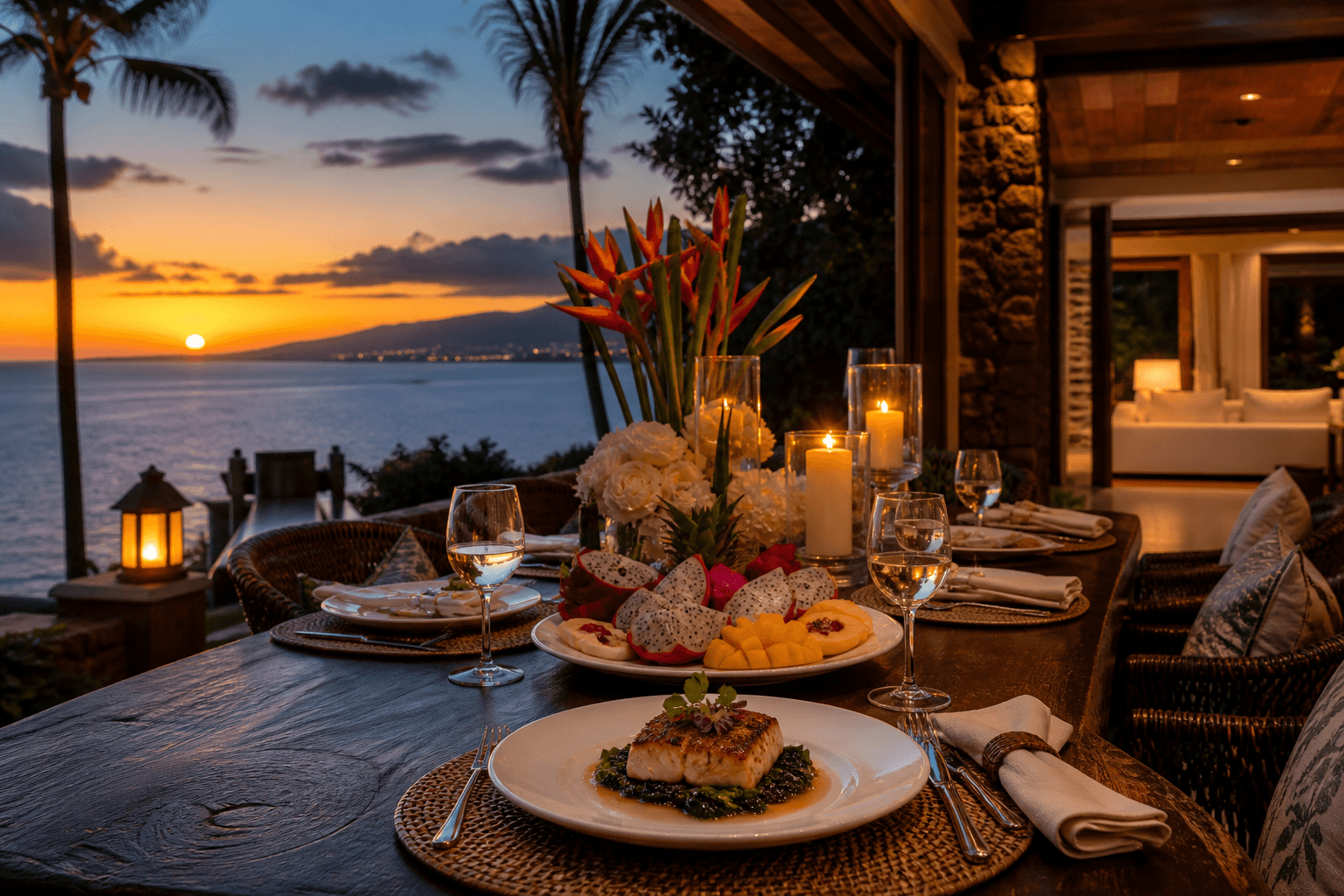
Most elopement dinners we cook on Maui are on villa lānai in Wailea, Mākena, Kāʻanapali and Kapalua. West Maui terraces catch the trade winds, so candles need glass and the table needs a sheltered corner; every outdoor table we set gets a covered backup agreed in writing.
Upcountry houses carry a travel surcharge from $75, printed as its own line, and Pāʻia and the North Shore are quoted with the menu. If the villa kitchen is small, tell us; we check before we quote.
Dinner for two, or a small family table
For the two of you, dinner for two or an elopement dinner on Maui is published as a fixed event from $750+. A chef plans the menu with you, shops, cooks in the villa kitchen, serves and leaves it clean. Dessert can be the chef’s, or a small cake you ordered, plated on the night.
If parents or friends have flown in, it becomes a dinner party. Signature dinners on Maui are $225–$375 a guest with groceries included, for six or more. For a toast with a bartender, a four-hour villa bar starts from $1,200 plus $85 a guest, with spirits billed at cost or brought by you.
When the guest list grows
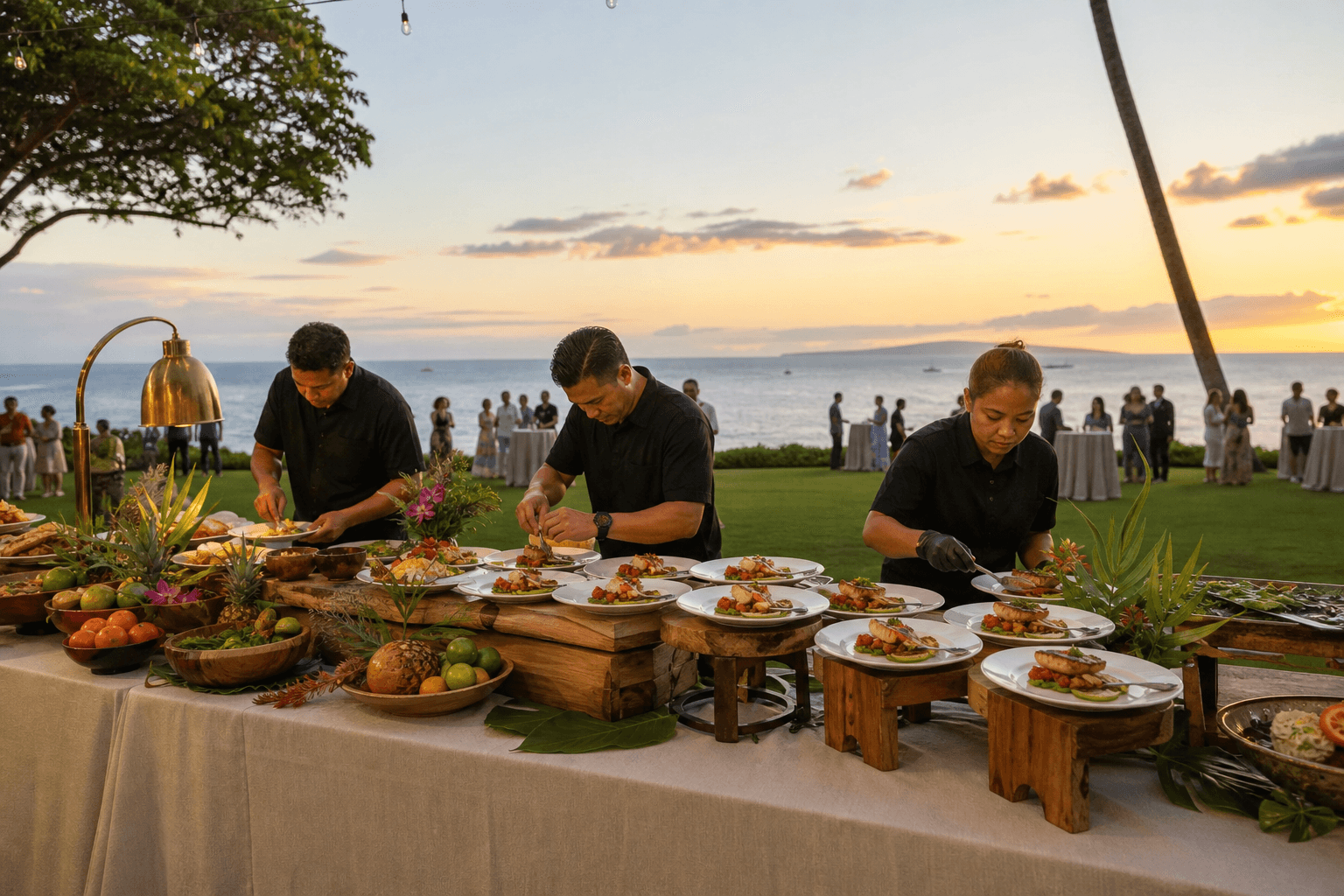
Some elopements turn into small weddings. Past about ten guests the evening needs servers and a planned service, and we quote it as Maui catering, for roughly 10 to 75 guests, with servers at $80 an hour and a sous-chef at $105 an hour as their own lines.
If there is a welcome dinner, a ceremony dinner and a farewell brunch across the week, that is a wedding week, and wedding catering Maui covers it from $225 a guest plus staffing, with each event priced separately. Our honeymoon dinners page covers the nights after.
Prices and booking on Maui
Maui is a booking island for us: send the details and we confirm the chef and the date in writing. On every quote a 20% service charge and Hawaiʻi GET up to 4.712% are their own lines, a 50% deposit locks the date and gratuity is voluntary. The full rate card is on Maui private chef cost.
A short Maui elopement checklist
Pick the coast and the villa, then the date and the time of day. Book the officiant and photographer and confirm who holds the permit. If it is Haleakalā, read the park rules and book the reservation. Apply for the license online and plan the in-person meeting inside the 30-day window. Agree a wind and rain plan with every vendor.
Then send us the address, the date, the number at the table and two lines about the meal you want. Use the quote form or WhatsApp at +1 808-468-7748. For everything we cook on the island, see private chef Maui.