When is whale season on Maui?
The Hawaiian Islands Humpback Whale National Marine Sanctuary says humpbacks are generally in Hawaiian waters from November through April or May, with a few seen in other months. The first arrivals show up in November and December, numbers climb through the holidays, and January to March is the usual peak. By April and May most mothers and calves have started the long trip north.
If whales are the main reason for the trip, aim for late January to mid-March. If you are coming for Christmas or New Year, you will very likely still see blows and breaches, just fewer of them. Our Christmas in Maui guide covers that busy holiday stretch.
Why Maui is the whale island
Humpbacks prefer water less than about 600 feet deep. The channel between Maui, Molokaʻi, Lānaʻi and Kahoʻolawe is a large, shallow, sheltered basin, and it is one of the most important breeding areas in the North Pacific. From the West and South Maui shores you are looking straight across it.
That is also why winter is the busiest time on Maui. Whale season overlaps with the holidays and with people escaping the mainland winter, so villas, rental cars and dinner reservations fill early from mid-December through March.
Watching from shore
You do not need a boat to see whales. The McGregor Point lookout on the highway west of Māʻalaea is a classic roadside spot, and the beaches of Kāʻanapali, Kīhei and Wailea all look out over the channel. On a calm morning you can often see blows, tail slaps and breaches from a villa lānai.
Bring binoculars and look for the spout first: a short, bushy puff of mist. Mornings are usually calmer before the trade winds pick up, which makes the white water easier to spot. Pull fully off the road at lookouts, because the highway is narrow and traffic is fast.
Going out on a boat
Boat tours run from rafts to larger catamarans and usually last two to four hours. Morning trips tend to have calmer water, and smaller boats feel the swell more, which matters if anyone gets seasick. Compare the departure point, the boat size, whether there is a naturalist on board and the refund policy if the trip is cancelled for wind.
Book the tour for early in your stay. If wind cancels it, you still have days to rebook, and you are not trying to squeeze it in before the flight home.
The 100-yard rule and other ways to be a good guest
Federal and state rules prohibit approaching a humpback whale closer than 100 yards, by any means, and the rule covers swimmers, paddleboarders, kayaks, canoes, boats and drones. Aircraft must stay at least 1,000 feet away. The rules apply year-round in all Hawaiian waters, and enforcement is shared by NOAA, the Coast Guard and the state.
If a whale comes toward you, the sanctuary asks boaters to stop and stay in neutral until it moves away. Never swim toward a whale or try to touch one. Mothers and young calves are especially sensitive.
Planning a whale-season week on Maui
Most winter weeks follow a simple pattern: an early boat or a lookout in the morning, a beach or pool in the middle of the day, and an early sunset dinner. South and West Maui are the dry sides of the island and are where most visitors stay. Book villas, cars and any big dinner reservations early, because whale season is peak season.
Expect winter surf on north-facing shores and the occasional wet day. Keep one flexible day for the tour and plan the rest around it. Our Wailea restaurants guide and Kāʻanapali restaurants guide cover eating out on the two main resort coasts.
Whale season with kids and grandparents
Shore watching is the easiest way to include everyone: a lānai or a beach chair, binoculars and patience. For a boat, a larger vessel and a morning departure are gentler for young children and older guests, and a short trip is better than a long one. Hats, sunscreen, water and a light jacket for the wind on the way back cover most of it.
Humpback males sing in Hawaiian waters during the season, and snorkelers and swimmers sometimes hear the song underwater on calm days. It is one of the best memories of a winter trip, and it costs nothing.
When is a dinner at the villa better than eating out?
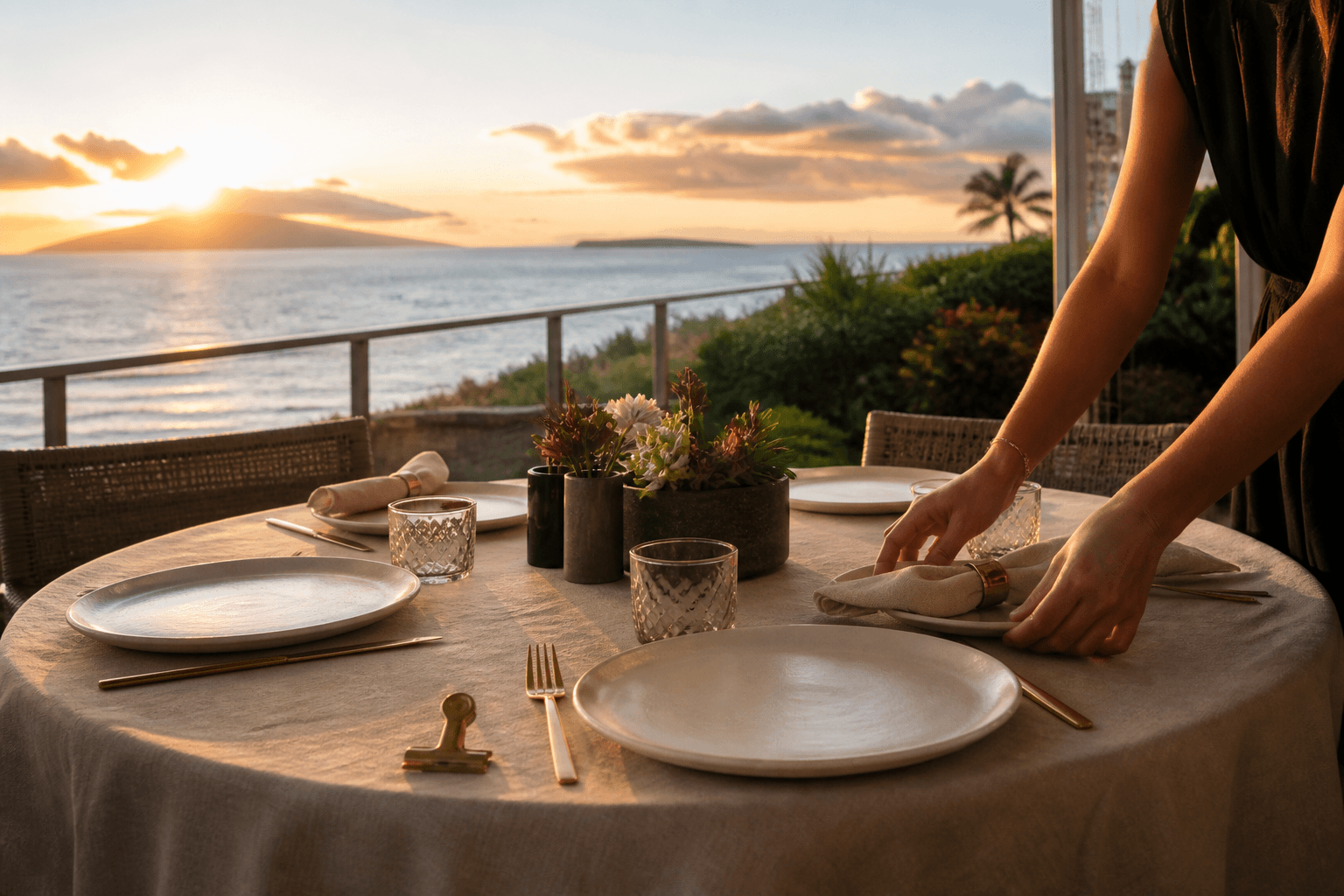
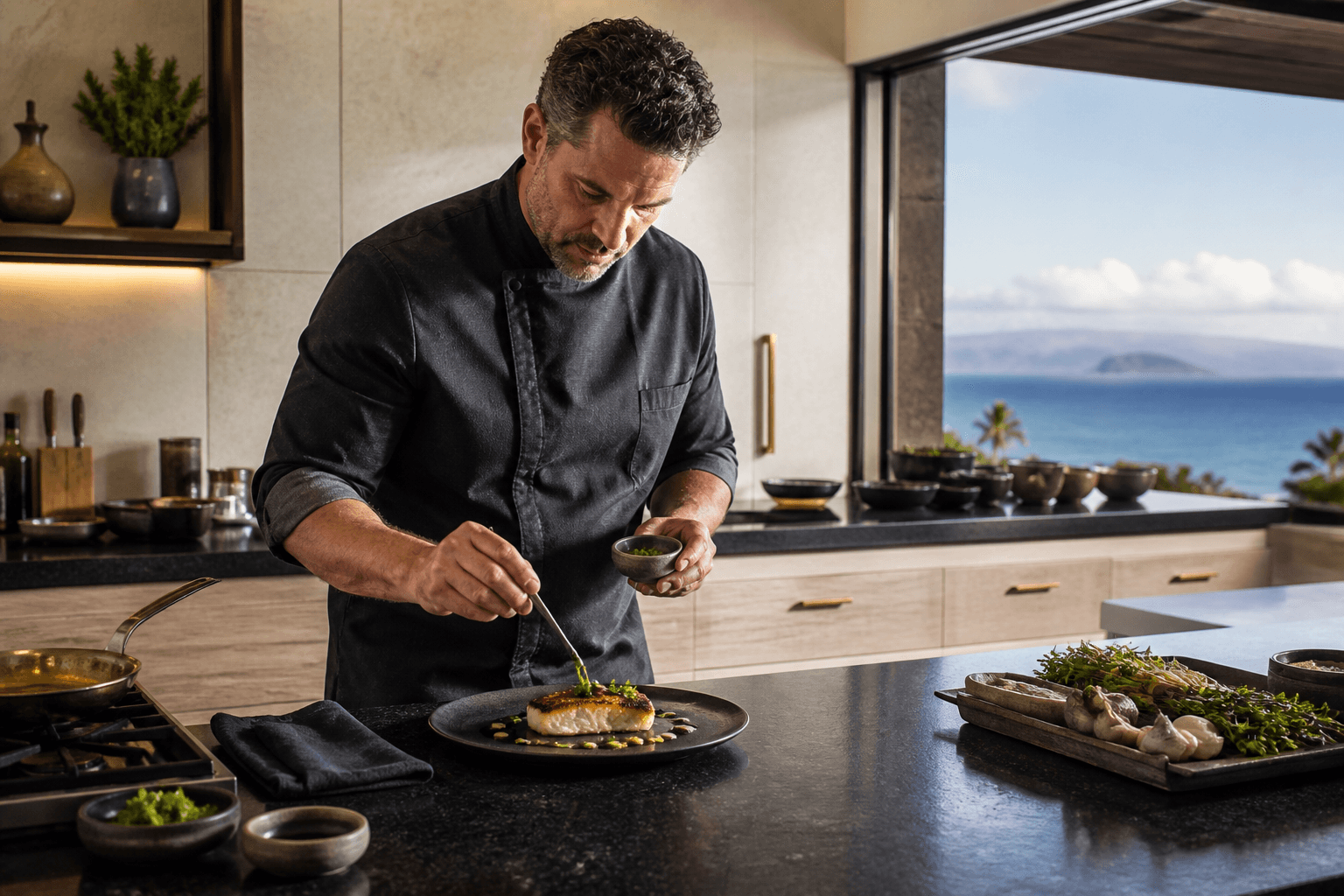
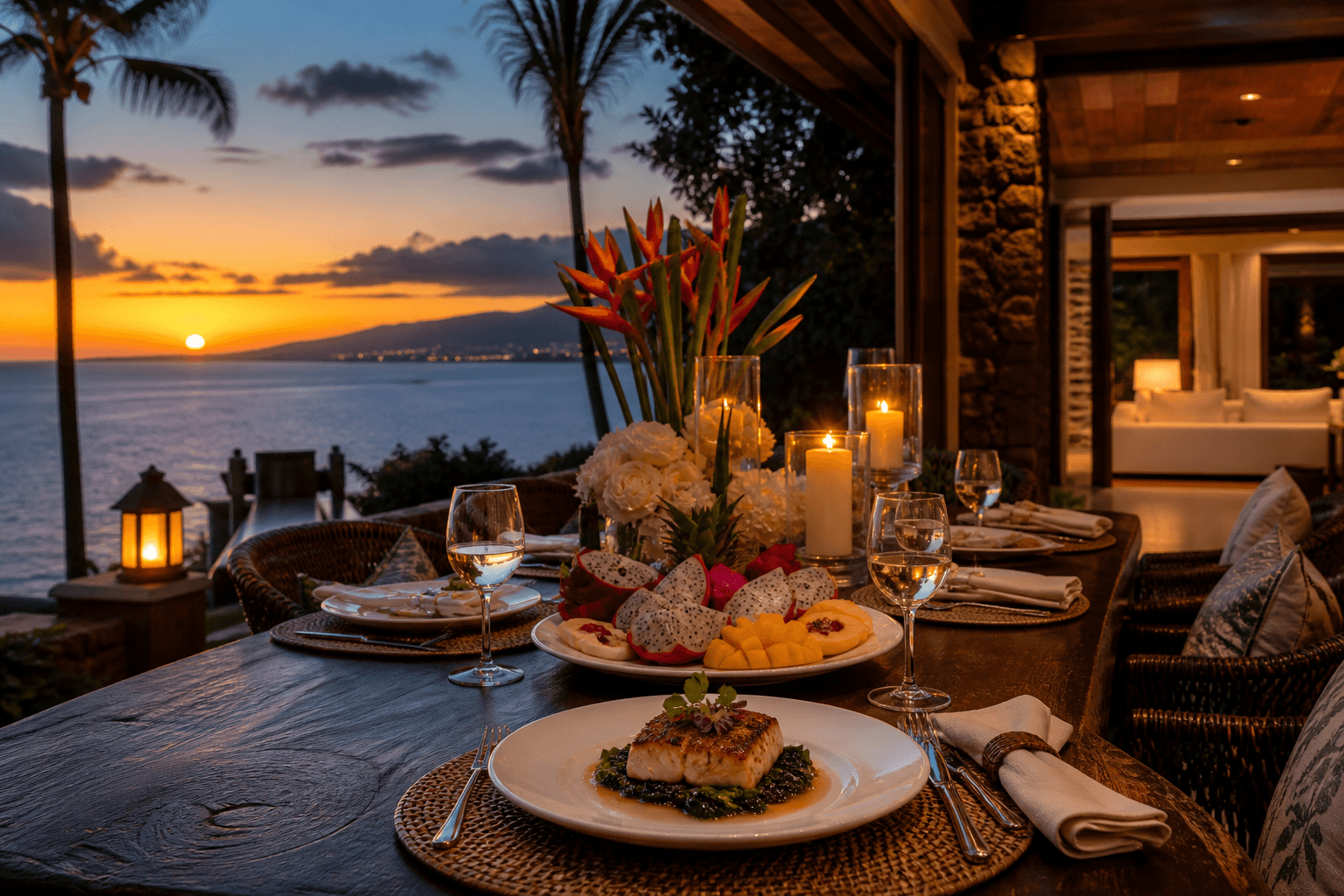
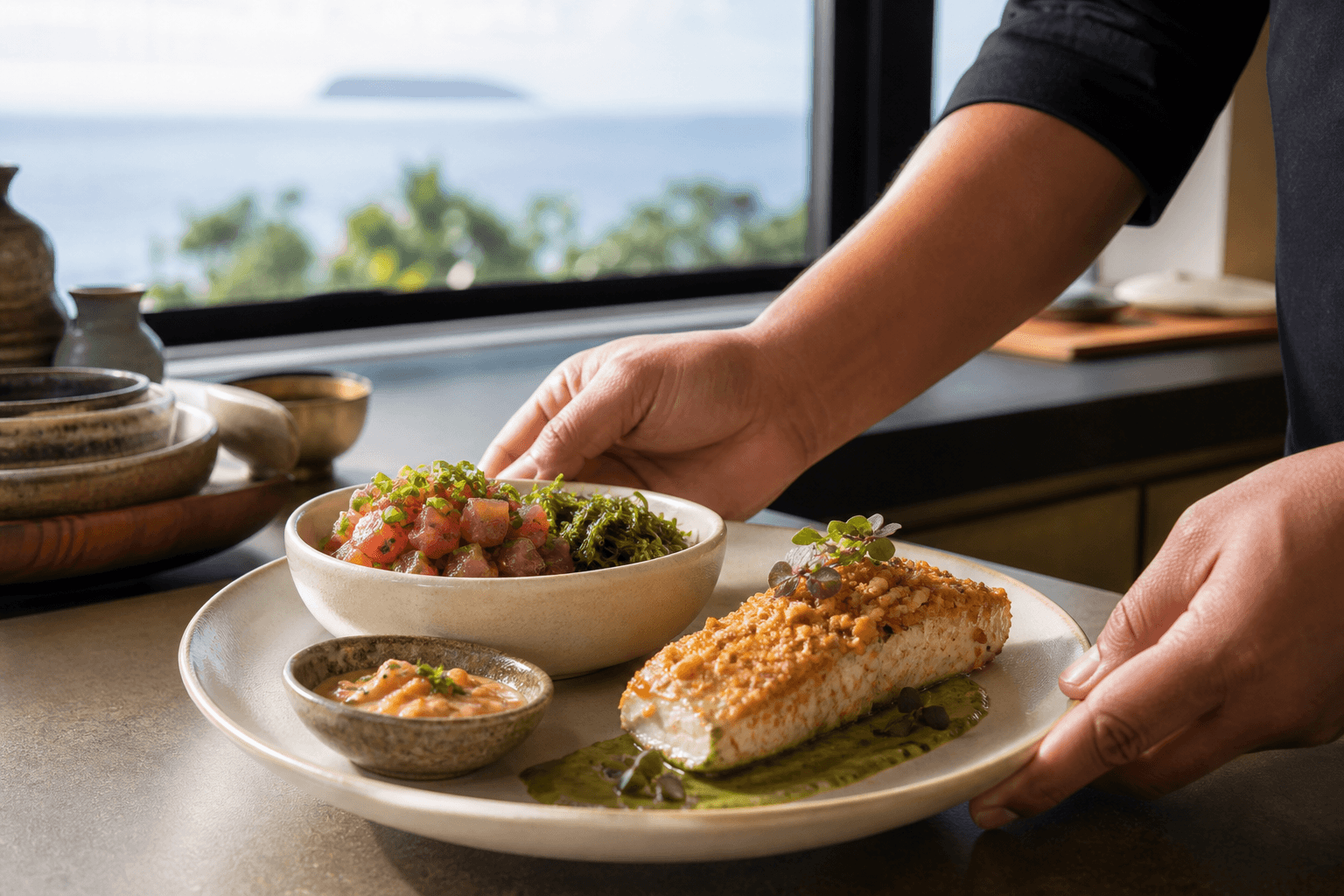
After a morning on the water, many groups would rather not drive to a 6 p.m. reservation, especially in peak weeks when good tables are hard to get. A personal chef Maui dinner is planned with you, shopped that day, cooked and served on your lānai while you watch the channel at sunset, and the kitchen is cleaned before we leave. Fish is named as the species we actually bought.
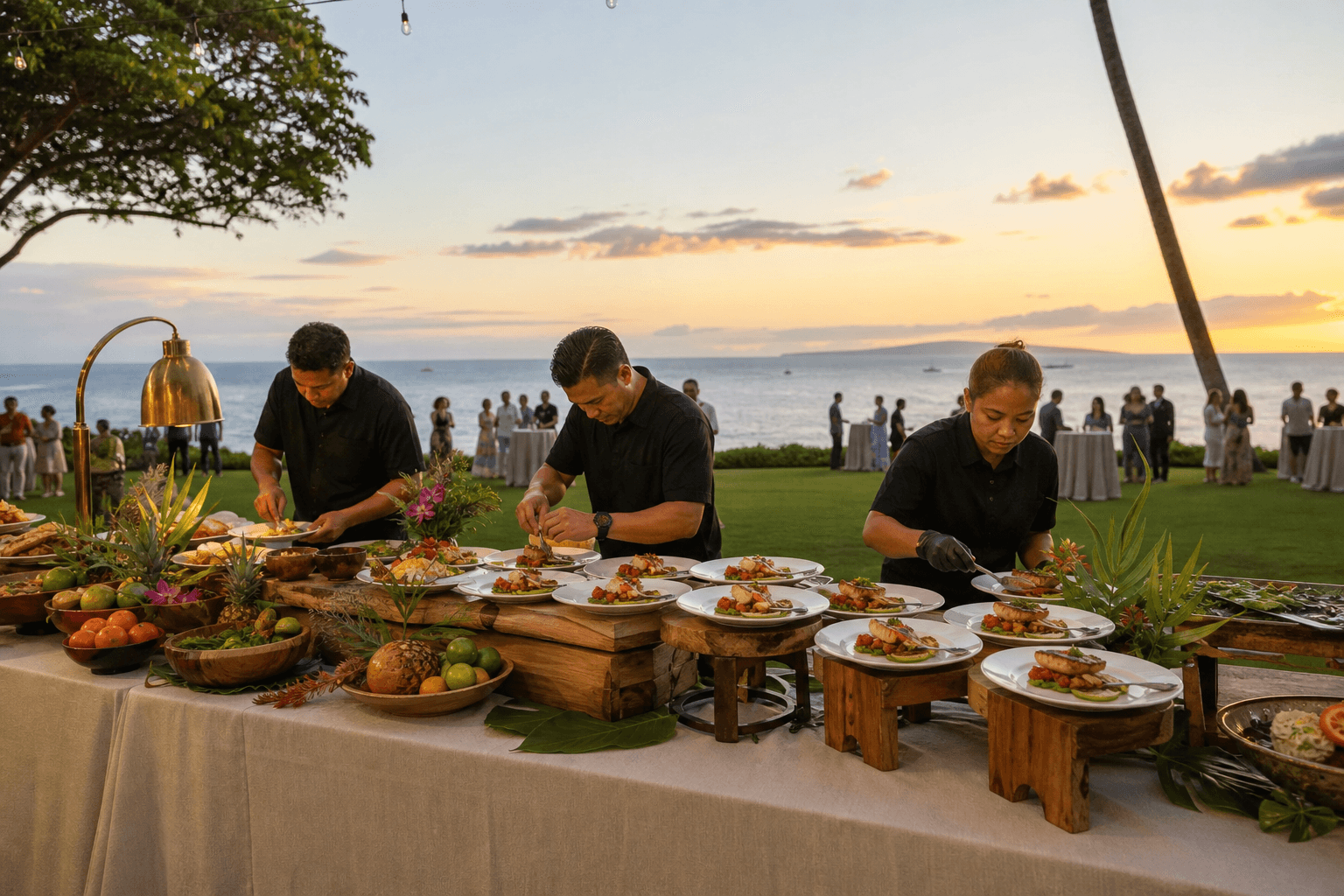
For larger family groups or a whale-season birthday on the lawn, Maui catering is the staffed version for roughly ten to seventy-five guests, with servers at $80 an hour and a sous-chef at $105 an hour on four- to five-hour minimums, each on its own line. Tables, linens, tents and rentals are not included unless you ask, and then they are quoted separately.
What does a villa dinner cost with us?
Signature dinners on Maui are published at $225–$375 a guest with groceries included, for a minimum party of six, and a simpler menu runs $190–$225 a guest. Upcountry addresses carry a published travel surcharge from $75. A 20% service charge and Hawaiʻi GET of up to 4.712% are their own lines, a 50% deposit locks the date and gratuity is voluntary. The full card is on Maui private chef cost.
How to plan your winter nights
Whale season is our busiest stretch, so send the villa address, your dates, the guest count, which nights you want cooked and any allergies through the quote form as early as you can, or message us on WhatsApp at +1 808-468-7748. We reply in writing with a menu direction and a total. For dinners anywhere on the island, see private chef Maui.