Why the markets matter on Maui
Maui grows more than most visitors expect. Upcountry slopes around Kula and Makawao grow greens, onions, herbs and flowers in cool air. The wetter windward side grows tropical fruit. Fishing boats work out of Māʻalaea, Lahaina and Kahului harbours. A farmers market is where a lot of that meets the people cooking it.
For a villa week in Wailea, Kāʻanapali or Kapalua, the markets do two jobs. They put better produce on the table than a resort grocery shelf, and they are a genuinely good morning out. The two goals pull in slightly different directions, so it helps to know what you are going for.
When and where to go
Maui markets run on a weekly rhythm. The best-known is the Saturday-morning Upcountry market in Kula, which draws farmers from across the slopes and is worth the drive up the mountain if you are staying on the south or west side. Smaller town markets in South Maui, West Maui and Central Maui run on weekday mornings or afternoons.
Schedules change with the seasons and with the vendors, so check the current day and hours before you drive. Go early. The best greens, avocados and fish sell out first, and the morning is cooler for the walk around. Bring cash, because not every stall takes cards, and bring a cooler bag if your drive back to the coast is longer than half an hour.
What is in season, roughly
Maui has a long growing season, but it still has one. Mangoes, lychee and stone-fruit-style tropical fruit peak in the warmer months. Citrus and avocado varieties take over toward winter. Kula onions, lettuces and herbs appear for most of the year, while flowers and specialty crops come and go.
Do not plan a menu around a fruit you saw on a list. Plan around what is actually on the table that week. That is how a chef works on Maui, and it is the main reason a villa dinner built from market shopping tastes different from one built from a supermarket run.
How a chef shops the market for a villa
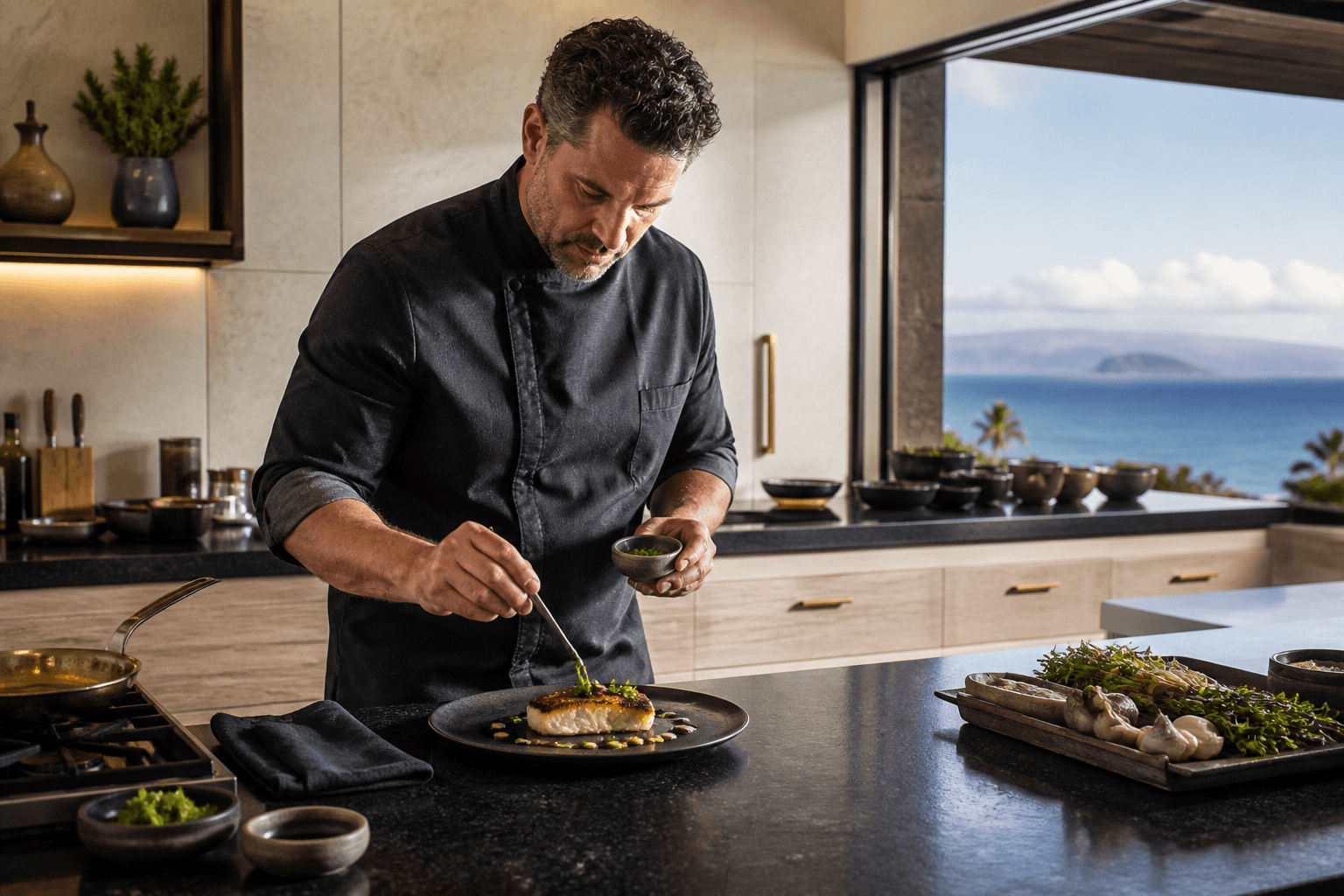
When we cook a villa week, the chef writes the menu with you first, in broad strokes: a fish night, a grill night, a long Saturday dinner, lighter lunches by the pool. The specific vegetables, fruit and fish are then filled in from what is good that week, which is why a week-long menu often reads “catch of the day” or “market greens” rather than naming a species months ahead.
Groceries are billed at cost against receipts, and the chef keeps the shopping separate from the cooking fee so you can see both. We name produce and fish as what they are. We only name a farm once we have verified it in writing, and we will not decorate a menu with farm names to make it sound local. Our personal chef Maui page explains how a villa night runs from shop to cleanup.
Shopping for yourself on a self-catered day
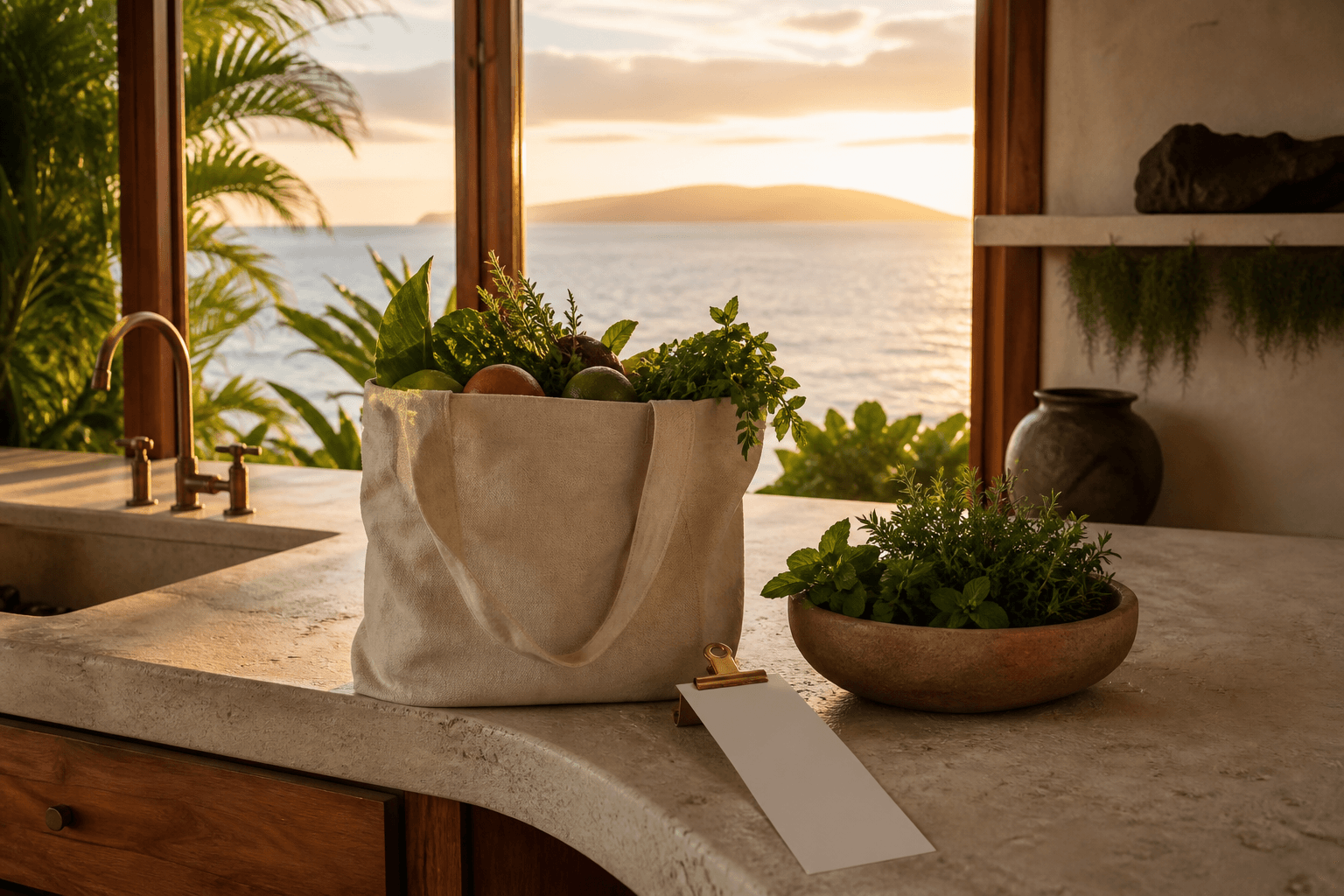
Many villa weeks mix chef nights with self-catered days. If you are shopping for those, keep it simple: a few avocados, a bag of greens, papaya or pineapple for breakfast, local eggs if you find them, and bread from a town bakery. Ask the stallholders what is best that morning and how to store it. Most are happy to tell you.
If a chef is cooking later that week, tell them what you already bought so nothing goes to waste. Leftover market produce is easy to fold into a lunch or a breakfast service.
Fish: the market, the harbour and the counter
Fish is the one thing that rarely comes from a weekend market stall. Most of what a chef cooks on Maui comes through a fish counter or a supplier that buys from the harbours. Species change with season and weather. Ahi, ono, mahi-mahi, opah and bottomfish all appear, but no honest cook can promise one particular fish on a particular night.
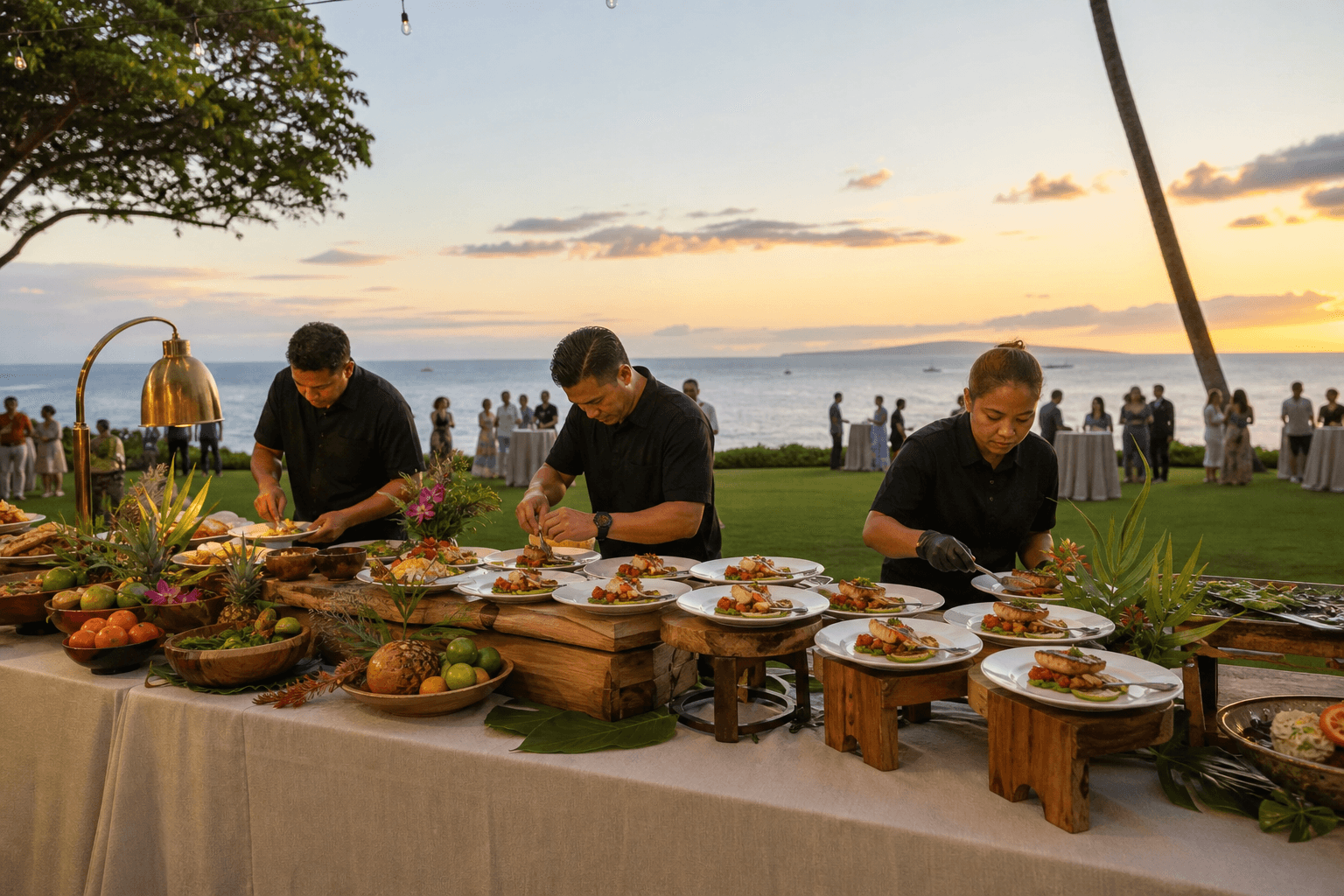
For a group dinner, the chef will plan the fish course with a backup. For a staffed party, it is part of the written menu. Our Maui catering page covers how larger villa events are cooked and served.
A sample market-led week on Maui
To show how this works in practice, here is the kind of outline a chef might write for six guests staying a week in Wailea. Night one is a welcome dinner: a market salad of Kula greens and herbs, grilled island fish with a citrus dressing, rice, and sliced tropical fruit with a simple cake. Night three is a grill night on the lānai: marinated chicken or beef, charred vegetables from the market, and a bright slaw.
Midweek there is a self-catered day. The chef leaves a labelled tray of cut fruit, a grain salad and a sauce or two in the fridge so lunch is easy. Night five is the long Saturday dinner after the Upcountry market run, with a raw fish starter, a slow-cooked main and a dessert built around whatever fruit looked best that morning. Breakfasts can be added on any day.
Nothing in that outline names a species or a farm ahead of time. The structure is fixed and the ingredients are filled in that week. That is how you get a menu that tastes like Maui in October, not like a printed card from last spring.
From market bag to dinner table
A practical week often looks like this. The chef shops on the first day, drops off breakfast and lunch basics, and cooks the welcome dinner. Midweek they top up the fish and greens. A second market run before the weekend sets up the big dinner. Between visits the fridge stays labelled and organised, so self-catered meals are easy.
For a single dinner, the published Maui bands apply. The CORE band is $225–$375 a guest with groceries included, and the full rate card, including Stay Chef days for a whole week, is on Maui private chef cost. Send your dates, the villa address and the size of the group and we will reply with a written quote. If you would rather start with the overview, the private chef Maui page covers every island service in one place.